Borderline personality disorder (BPD) can affect the way a person handles emotions, understands themselves, and builds relationships. Its symptoms include an intense fear of abandonment, unstable relationships, impulsive behavior, an uncertain sense of identity, and sudden changes in emotional state. The DSM-5-TR identifies nine symptom criteria associated with BPD.
Not everyone with BPD experiences the same symptoms. One person may struggle mainly with emotional reactions and relationships, while another may experience impulsive behavior, feelings of emptiness, or dissociation. A mental health professional looks at the overall pattern, not just one or two difficult experiences, before making a diagnosis.
What Are the Symptoms of Borderline Personality Disorder?
Borderline personality disorder is a mental health condition involving ongoing difficulties with emotional regulation, relationships, self-image, and impulsivity.
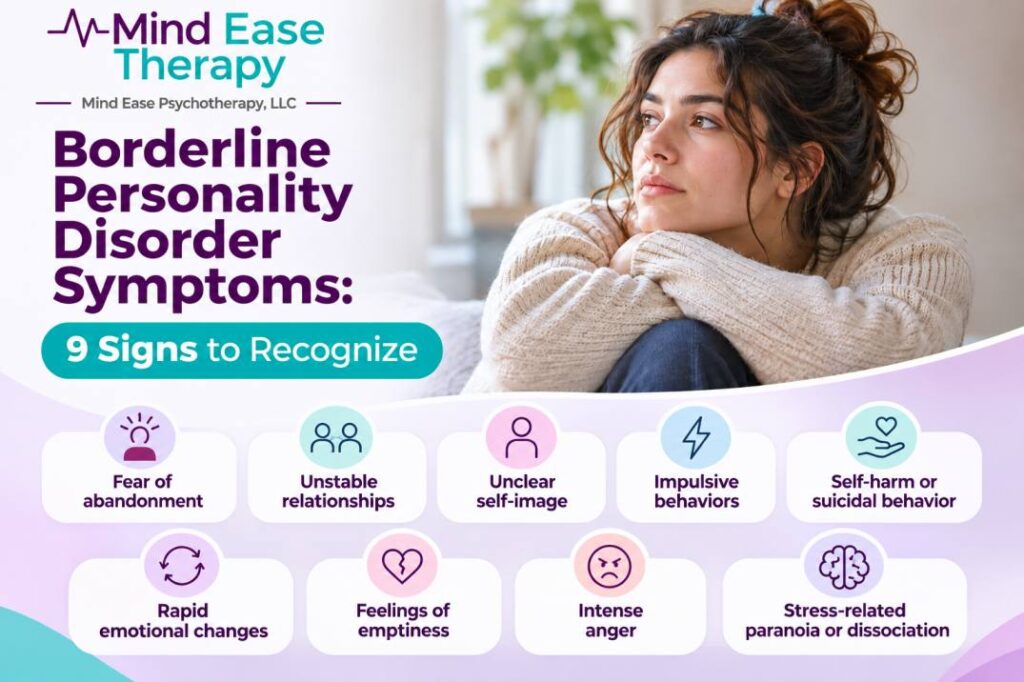
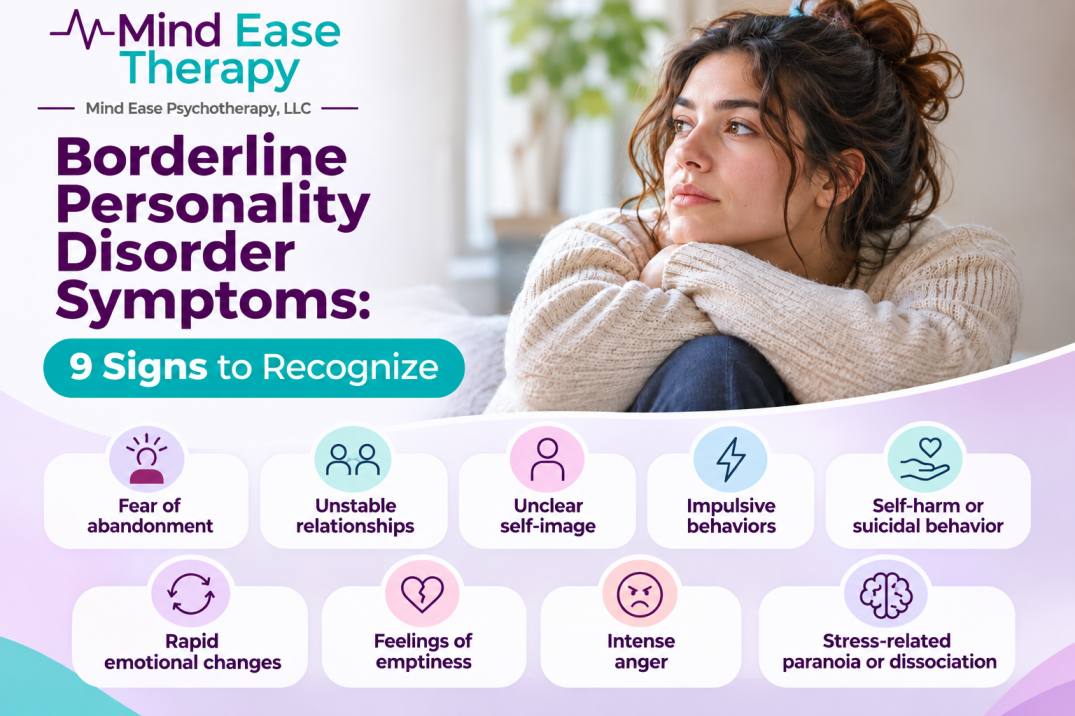
The nine main symptom criteria are:
- Strong fear of abandonment.
- Unstable and intense relationships.
- An unstable sense of identity.
- Impulsive behavior that may cause harm.
- Repeated self-harm or suicidal behavior.
- Intense emotional changes.
- Persistent feelings of emptiness.
- Intense anger or difficulty controlling anger.
- Temporary paranoia or dissociation during stress.
These symptoms can affect everyday situations. A disagreement with a loved one, for example, may cause intense distress. A change in plans might bring up fears of rejection. The reaction can feel much stronger than the situation appears to warrant.
However, having one or more of these experiences does not mean you have BPD. Other mental health conditions and life circumstances can cause similar difficulties.
What Are the 9 Main Symptoms of Borderline Personality Disorder?
The DSM-5-TR describes nine criteria that clinicians consider when assessing borderline personality disorder. Here is what each one can look like in everyday life.
1. Intense Fear of Abandonment
A person with BPD may become extremely worried about being rejected, left, or separated from someone they care about. Sometimes, this fear appears even when there is no clear reason to believe the relationship is ending.
For example, imagine that your partner does not respond to a message for several hours. You may start wondering whether they are upset with you or planning to leave. You might send several messages, repeatedly ask for reassurance, or become very distressed.
The concern is not simply wanting attention. It is the intensity of the fear and the difficulty of managing it.
2. Unstable and Intense Relationships
Relationships may move between strong closeness and serious conflict. Someone may feel deeply connected to another person one day, then feel hurt, rejected, or disappointed after a disagreement.
For example, you might consider a friend the most supportive person in your life. After an argument, you may suddenly feel that the friend does not care about you at all.
This pattern is sometimes described as idealization and devaluation. It can make relationships emotionally exhausting for everyone involved.
It does not mean that people with BPD cannot maintain healthy relationships. With appropriate support, people can learn to manage conflict, communicate more clearly, and build greater relationship stability.
3. Unstable Self-Image or Sense of Identity
An unstable sense of identity means having difficulty maintaining a consistent understanding of who you are. Your values, goals, interests, or plans may change frequently, leaving you unsure about your direction.
You might feel confident about your career choices one week and question everything the next. You may also find that your opinion of yourself changes depending on how other people treat you.
This goes beyond the uncertainty that most people experience when making important life decisions. It is a recurring difficulty with self-image and identity.
4. Impulsive or Risky Behaviors
Impulsive behavior means acting without taking enough time to consider the consequences. In BPD, this may happen during periods of emotional distress.
Examples include:
- Spending money without considering the financial consequences.
- Driving recklessly.
- Misusing alcohol or other substances.
- Engaging in risky sexual behavior.
- Binge eating.
Not every impulsive decision is a sign of BPD. The diagnostic criterion concerns a recurring pattern of potentially self-damaging behavior in at least two areas.
5. Repeated Self-Harm or Suicidal Behaviors
Repeated suicidal behavior, threats or gestures, and intentional self-injury are serious symptoms associated with BPD.
Self-injury may involve cutting, burning, or other actions that deliberately cause physical harm. Some people describe self-harm as an attempt to cope with emotional pain that feels difficult to control. This does not make the behavior safe.
Self-harm and suicidal behavior are not exactly the same. A person may injure themselves without intending to die, but both situations deserve professional attention.
If you are thinking about suicide or feel unable to keep yourself safe, seek immediate help. You do not need to have a BPD diagnosis to receive support.
6. Intense and Rapidly Changing Emotions
Emotional changes can be particularly difficult for people with BPD. Feelings may become very intense and shift quickly, sometimes after an upsetting interaction or stressful event.
For instance, a disagreement with a family member may leave you feeling angry. A short time later, that anger might turn into sadness, anxiety, or guilt.
These reactions can interfere with concentration and decision-making. They may also make it difficult to explain what you are feeling while the distress is happening.
The emotional changes associated with BPD can last for hours and sometimes longer. Their pattern is different from the sustained mood episodes that characterize bipolar disorder.
7. Persistent Feelings of Emptiness
Chronic emptiness is a recurring feeling that something is missing. A person may describe feeling blank, disconnected, or unable to find meaning in activities that once mattered to them.
You might spend time with friends and still feel alone. You may have things to look forward to but struggle to feel interested or satisfied.
This is not the same as ordinary boredom or temporary disappointment. It is a persistent experience that can affect a person’s sense of connection and well-being.
8. Intense Anger or Difficulty Controlling Anger
Some people with BPD experience anger that becomes difficult to manage. It may arise during arguments, misunderstandings, frustration, or situations that feel like rejection.
The reaction might involve shouting, frequent arguments, irritability, or difficulty calming down after a disagreement. Other people may turn their anger inward through harsh self-criticism.
Feeling angry from time to time is normal. The concern is a recurring pattern of intense anger or difficulty controlling it that creates problems in everyday life.
9. Stress-Related Paranoia or Dissociation
High levels of stress can sometimes lead to temporary suspicious thoughts or dissociation in people with BPD.
Stress-related paranoia may involve believing that someone intends to hurt, deceive, or reject you, even when there is little evidence to support that belief.
Dissociation is different. It can involve feeling disconnected from your body, thoughts, emotions, or surroundings. For example, you may feel as though you are watching yourself from a distance or that the world around you is unreal.
These experiences can be unsettling. If they happen repeatedly, it is important to discuss them with a mental health professional.
Emotional, Behavioral, and Cognitive Symptoms of BPD
The nine diagnostic criteria can also be understood through three broad groups: emotional, behavioral, and cognitive symptoms. These groups make the experiences easier to describe, but they are not additional diagnostic categories.
Emotional Symptoms
Emotional symptoms affect how a person experiences and manages feelings. They may include intense mood changes, fear of rejection, anger, anxiety, and persistent emptiness.
A person may find it difficult to return to a calm emotional state after an argument or upsetting event. Even a relatively small misunderstanding can lead to distress that lasts for hours.
Behavioral Symptoms
Behavioral symptoms involve actions that may occur during emotional distress. These can include impulsive spending, substance misuse, risky decisions, repeated reassurance-seeking, and self-harm.
The behavior is not the same for everyone. Some people show their distress openly, while others withdraw or keep their feelings to themselves.
Cognitive and Self-Image Symptoms
Cognitive symptoms affect the way a person thinks about themselves, other people, and everyday situations.
Examples include an unstable sense of identity, difficulty trusting others, black-and-white thinking, and temporary suspicious thoughts during stress.
Some of these experiences are associated with BPD, but they are not separate DSM-5-TR diagnostic criteria.
How Does BPD Affect Daily Life?
The effects of borderline personality disorder can extend beyond emotional distress. Symptoms may influence relationships, work, personal decisions, and confidence.
Romantic and Family Relationships
Fear of abandonment and intense emotional reactions can make close relationships difficult. A disagreement or change in plans may lead to worries about rejection.
Partners and family members may not understand why a situation causes such a strong reaction. Open communication and consistent boundaries can help, but professional support may also be important.
Friendships and Social Interactions
A person may want close friendships but worry that others will lose interest or leave. Misunderstandings can lead to arguments, withdrawal, or repeated requests for reassurance.
Over time, these patterns may make social relationships feel uncertain. That does not mean lasting friendships are impossible.
Work and Responsibilities
Emotional distress can affect concentration, teamwork, and the ability to manage daily responsibilities. A difficult conversation with a colleague may make it hard to focus on work afterward.
Impulsive decisions and changes in personal goals may also affect long-term plans. The impact varies depending on the person’s symptoms and circumstances.
Self-Esteem and Personal Identity
A person who struggles with an unstable self-image may find it difficult to recognize their strengths or maintain confidence in their decisions.
They may judge themselves harshly after a mistake or feel differently about themselves depending on how someone else responds to them. Therapy can help people understand these patterns and develop a more consistent sense of self.
Borderline Personality Disorder DSM-5 Diagnostic Criteria
The DSM-5-TR describes BPD as a persistent pattern of instability in relationships, self-image, and emotions, along with significant impulsivity.
A person must meet at least five of the nine diagnostic criteria for a BPD diagnosis to be considered. However, counting symptoms is not enough. The clinician also needs to understand how long the difficulties have been present, how they affect daily functioning, and whether another condition better explains them.
During an assessment, a mental health professional may ask about:
- Current emotional and behavioral difficulties.
- Relationship history and recurring conflicts.
- Changes in self-image and personal goals.
- Impulsive or risky behavior.
- Self-harm or suicidal thoughts.
- Previous mental health treatment.
- Other medical or mental health concerns.
There is no single blood test or brain scan that confirms BPD. Diagnosis relies on a clinical assessment and a detailed understanding of the person’s experiences.
A professional may also assess conditions that can occur alongside BPD, such as depression, anxiety, or substance use disorders.
What Can Trigger or Worsen BPD Symptoms?
Certain situations can increase emotional distress in people with BPD. Triggers are different for everyone, so it helps to notice which experiences tend to cause the strongest reactions.
Common triggers may include:
Perceived rejection: A delayed reply, cancelled plan, or change in someone’s behavior may bring up fears of abandonment.
Relationship conflict: Arguments and misunderstandings can lead to anger, sadness, anxiety, or worries about losing someone.
Major life changes: Moving, changing jobs, ending a relationship, or experiencing a loss may increase emotional pressure.
Loneliness: Feeling disconnected from others can make emptiness or abandonment fears more difficult to manage.
Ongoing stress: Work pressure, financial difficulties, and several stressful events happening together may make emotional regulation harder.
Recognizing triggers does not mean you can prevent every difficult reaction. It gives you and your therapist a starting point for understanding patterns and choosing appropriate coping strategies.
What Does a BPD Episode Look Like?
People often use the phrase “BPD episode” to describe a period of intense emotional distress. It is an informal expression, not a separate formal diagnosis in the DSM-5-TR.
During one of these periods, a person may feel overwhelming anger, sadness, fear, or anxiety. They may react strongly to a disagreement, worry that someone is leaving, withdraw from others, or make an impulsive decision.
For example, a disagreement with a partner might lead to intense feelings of rejection. The person may send repeated messages or struggle to calm down. Later, they might feel regret or shame about how they responded.
The experience is not identical for everyone. A single emotional reaction also does not establish that someone has BPD.
Borderline Personality Disorder vs. Bipolar Disorder
BPD and bipolar disorder can both involve changes in mood, but they are different conditions. Their symptoms can overlap, which is one reason professional assessment matters.
| Feature | Borderline Personality Disorder | Bipolar Disorder |
| Main pattern | Ongoing difficulties with emotions, relationships, and self-image | Distinct episodes of depression and mania or hypomania |
| Mood changes | Often linked to interpersonal events or stress | Occur as part of mood episodes |
| Relationships | Fear of abandonment and unstable relationship patterns may occur | Relationship difficulties may arise during mood episodes |
| Self-image | An unstable sense of identity may be present | Changes in self-image may occur during mood episodes, but persistent identity disturbance is not a defining feature |
| Diagnosis | Based on a persistent pattern of symptoms and their impact | Based on the history and pattern of mood episodes |
BPD-related emotional changes may happen quickly and often follow an upsetting event. Bipolar mood episodes generally involve more sustained changes in mood, energy, and activity.
This difference is useful, but it is not enough to diagnose either condition. Some people have both BPD and bipolar disorder. A clinician needs to consider the full history, symptoms, and their effect on daily life.
What Therapies Help Treat Borderline Personality Disorder?
Psychotherapy is the primary treatment for borderline personality disorder. Treatment can help people understand emotional patterns, manage distress, reduce harmful behaviors, and improve relationships.
The right approach depends on the person’s needs and clinical assessment. Several structured therapies are used to treat BPD.
Dialectical Behavior Therapy (DBT)
Dialectical behavior therapy was developed specifically to help people who experience severe emotional and behavioral difficulties, including those associated with BPD.
DBT teaches skills in four areas:
- Mindfulness, which helps you pay attention to the present moment.
- Distress tolerance, which helps you manage difficult situations without making them worse.
- Emotion regulation, which helps you understand and respond to feelings.
- Interpersonal effectiveness, which focuses on communication and healthy boundaries.
These skills can be useful when emotions feel overwhelming or when conflict becomes difficult to manage.
Cognitive Behavioral Therapy (CBT)
Cognitive behavioral therapy helps people recognize connections between thoughts, feelings, and actions.
For example, you may automatically assume that a delayed message means someone is angry with you. CBT can help you examine that assumption and consider other explanations before reacting.
It may also help address anxiety, depression, and other difficulties that occur alongside BPD.
Mentalization-Based Therapy (MBT)
Mentalization-based therapy focuses on understanding your own thoughts and feelings while also considering what other people might be thinking or feeling.
This can help when emotional distress makes it difficult to interpret someone’s intentions. It encourages a person to pause and consider different explanations rather than immediately assuming the worst.
Transference-Focused Psychotherapy (TFP)
Transference-focused psychotherapy explores patterns in how a person sees themselves and other people. It also looks at how these patterns appear in relationships, including the relationship with the therapist.
The aim is to help the person develop a more consistent understanding of themselves and others.
Can Medication Treat BPD?
Medication is not the primary treatment for the core symptoms of BPD. A clinician may prescribe medication for specific symptoms or co-occurring conditions, such as depression or anxiety, when appropriate.
Medication decisions should be made with a qualified healthcare professional. Do not start, stop, or change prescribed medication without discussing it with your prescriber.
How Can Someone Manage BPD Symptoms in Daily Life?
Daily coping strategies can support professional treatment. They are not a replacement for therapy, but they may help you respond more thoughtfully when emotions become intense.
Notice What Happens Before an Emotional Reaction
Try to identify what happened just before you became upset. Was there an argument, a change in plans, or a situation that made you feel rejected?
Writing down the situation, your feelings, and your response can help you notice patterns over time.
Try Grounding Techniques
Grounding exercises can help when you feel overwhelmed or disconnected. You might focus on your breathing, name objects in the room, or notice the feeling of your feet against the floor.
The goal is to bring your attention back to what is happening around you.
Give Yourself Time Before Reacting
When emotions are intense, it can be difficult to think clearly. If you are safe, take a short break before responding to a message or continuing an argument.
A pause does not solve the disagreement, but it can give you time to choose how you want to respond.
Communicate What You Need
Try explaining your feelings without assuming that you know what another person intended.
For example, you could say, “I felt worried when I didn’t hear back from you.” This is often more constructive than accusing someone of deliberately ignoring you.
Keep a Regular Routine
Regular sleep, meals, physical activity, and planned activities can support general well-being. These habits do not treat BPD on their own, but they can provide some structure during stressful periods.
Continue Professional Support
A therapist can help you practice coping skills and understand situations that are difficult to manage. Consistent support also gives you a place to discuss setbacks without having to handle everything alone.
When Should You Seek Professional Help for BPD Symptoms?
Consider speaking with a mental health professional when emotional difficulties, relationship problems, impulsive behavior, or feelings of emptiness repeatedly interfere with your life.
You do not have to experience all nine symptoms before asking for help. Professional support may be useful if you:
- Frequently worry that people will leave or reject you.
- Experience emotional reactions that feel difficult to control.
- Have recurring conflicts in close relationships.
- Make impulsive decisions that put your well-being at risk.
- Struggle with a persistent sense of emptiness.
- Have difficulty understanding or maintaining your sense of identity.
- Experience self-harm or suicidal thoughts.
An initial assessment usually involves discussing your symptoms, personal history, relationships, and current concerns. The clinician may also ask about previous treatment and other mental health difficulties.
If you or someone else is in immediate danger, or you cannot stay safe because of suicidal thoughts or urges to self-harm, seek emergency help. In the United States, call or text 988 for the Suicide & Crisis Lifeline. For an immediate emergency, call 911.
Common Misconceptions About Borderline Personality Disorder
There are several misunderstandings about BPD that can make it harder for people to recognize their experiences and seek appropriate care.
BPD is only about mood swings. Emotional changes are one part of the condition. BPD can also affect relationships, self-image, impulse control, and a person’s sense of connection.
Everyone with BPD experiences all nine symptoms. This is not correct. A diagnosis may be considered when at least five criteria are present as part of the broader clinical pattern.
BPD and bipolar disorder are the same. They are separate conditions with different diagnostic patterns, although some symptoms overlap.
People with BPD cannot have stable relationships. Relationship difficulties can occur, but they do not make healthy relationships impossible. Communication skills, treatment, and mutual understanding can help.
BPD cannot improve. Symptoms can improve with appropriate treatment. The amount of progress and the support needed differ from person to person.
Frequently Asked Questions
What are the first signs of borderline personality disorder?
Possible signs include intense fear of abandonment, strong emotional reactions, unstable relationships, impulsive behavior, and an uncertain sense of identity. These experiences can also occur for other reasons, so they cannot confirm a diagnosis on their own.
What are the nine symptoms of BPD?
The nine DSM-5-TR criteria include fear of abandonment, unstable relationships, identity disturbance, impulsivity, repeated self-harm or suicidal behavior, emotional instability, chronic emptiness, intense anger, and stress-related paranoia or dissociation.
Can you have BPD without having all nine symptoms?
Yes. A person does not need to meet all nine criteria. At least five must be present as part of the broader clinical pattern for a BPD diagnosis to be considered. A professional must assess the symptoms and their impact.
What are common BPD relationship symptoms?
Relationship-related symptoms may include fear of abandonment, intense reactions to disagreements, changing feelings about someone, and difficulty maintaining trust or closeness. The exact pattern varies between individuals.
What triggers BPD symptoms?
Perceived rejection, relationship conflict, loneliness, major life changes, and ongoing stress may increase emotional distress. Triggers are personal, and experiencing them does not mean you have BPD.
How is BPD different from bipolar disorder?
BPD involves ongoing difficulties with emotions, relationships, and self-image. Bipolar disorder involves distinct episodes of depression and mania or hypomania. A professional assessment is important because some symptoms can overlap.
What is the most effective therapy for BPD?
There is no single therapy that works best for everyone. DBT and other structured psychotherapies can help people manage symptoms and improve daily functioning. Treatment should be selected according to the person’s needs.
Can borderline personality disorder symptoms improve?
Yes. Many people experience improvement with appropriate treatment and support. Progress varies, and some people benefit from longer-term care.
Conclusion
Borderline personality disorder can affect the way a person experiences emotions, understands themselves, and maintains relationships. Its nine diagnostic criteria help clinicians identify the condition, but a symptom list cannot replace a proper assessment.
If these experiences are causing repeated distress or making everyday life difficult, speaking with a qualified mental health professional is a sensible next step. The right support can help you understand your symptoms, develop practical coping skills, and work toward healthier relationships.
If you are considering support through Mind Ease Psychotherapy LLC, ask about the clinician’s experience with BPD assessments and treatment, the approaches they offer, and whether those services fit your needs.