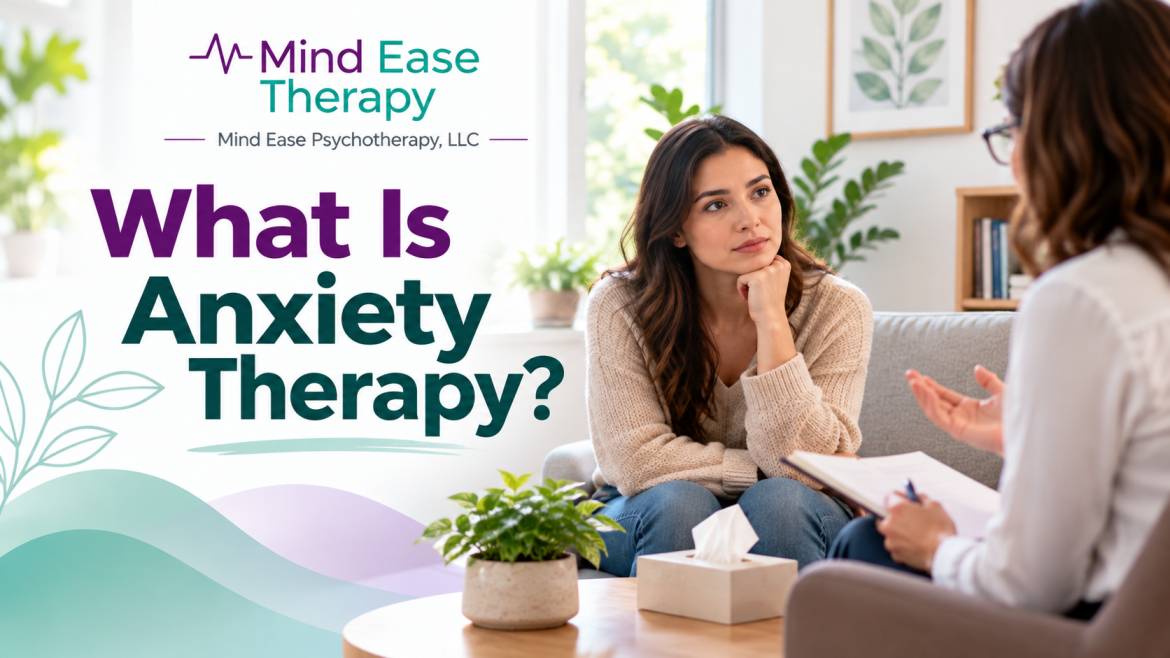
Anxiety therapy is a form of psychotherapy that helps you understand anxiety, manage anxious thoughts, and develop healthier responses to stressful situations. A licensed mental health professional uses evidence-based techniques to help you recognize anxiety triggers, reduce avoidance behaviors, and improve your ability to manage everyday challenges.
Anxiety therapy is not simply talking about your worries. It is a structured process that helps you understand why anxiety occurs, how it affects your thoughts and behavior, and what you can do to respond differently.
How Does Anxiety Therapy Work?
Anxiety therapy helps you recognize the connection between your thoughts, feelings, physical reactions, and behaviors. Once you understand these patterns, you can learn practical ways to manage anxiety and respond to situations that feel overwhelming.
For example, you might worry that making a mistake at work will cause others to judge you. That thought may trigger nervousness, muscle tension, and an urge to avoid speaking during meetings. Avoidance can provide temporary relief, but it may reinforce the fear over time.
A therapist can help you examine that thought, consider alternative perspectives, and gradually practice participating in meetings. This process helps you develop more flexible responses to anxiety.
Identifying Anxiety Triggers
Your therapist may help you identify situations, thoughts, or experiences that trigger anxiety. These could include work responsibilities, social interactions, uncertainty, health concerns, or significant life changes.
Understanding your triggers helps you recognize patterns that might otherwise feel automatic. You can then work on the responses that make anxiety harder to manage.
Learning Practical Coping Skills
Anxiety therapy can teach you how to respond to anxious thoughts without automatically treating them as facts. Depending on your treatment approach, you may practice challenging unhelpful beliefs, tolerating uncertainty, managing physical tension, or approaching situations you have been avoiding.
The goal is not to eliminate every anxious feeling. It is to help you respond to anxiety in ways that support your daily life.
What Types of Therapy Are Used for Anxiety?
Several psychotherapy approaches can help with anxiety. The most appropriate option depends on your symptoms, treatment goals, and individual circumstances.
Cognitive Behavioral Therapy (CBT)
Cognitive behavioral therapy is a well-established treatment for many anxiety disorders. It focuses on how thoughts and behaviors influence emotional responses.
CBT helps you recognize unhelpful thinking patterns, evaluate your assumptions, and change behaviors that contribute to anxiety. For example, if you regularly expect the worst before social events, a therapist may help you examine those predictions and practice entering social situations with greater confidence.
CBT often includes exercises and skills practice between sessions.
Exposure Therapy
Exposure therapy helps you gradually approach situations, objects, or sensations that trigger fear. It is commonly used for specific phobias and can be part of treatment for other anxiety-related conditions.
For example, someone who fears public speaking might begin by practicing a short presentation privately before progressing to speaking in front of a small group.
Exposure is planned and adjusted to the individual’s needs. It is not about forcing someone into a frightening situation without preparation or support.
Acceptance and Commitment Therapy (ACT)
Acceptance and commitment therapy helps you respond differently to difficult thoughts and feelings. Rather than trying to control every anxious thought, you learn to notice it and choose actions that reflect your values and goals.
For instance, you may feel anxious about meeting new people but still decide to attend a social event because maintaining relationships matters to you.
ACT uses acceptance, mindfulness, and values-based actions to support psychological flexibility.
What Can Anxiety Therapy Help With?
Anxiety therapy can help people manage persistent worry, fear, avoidance, and distress that interferes with everyday activities.
It may be useful for concerns such as:
- Generalized anxiety and excessive worry about everyday responsibilities.
- Social anxiety and fear of embarrassment or negative judgment.
- Panic-related anxiety and fear of experiencing another panic attack.
- Specific phobias involving particular objects or situations.
- Health-related worries that become difficult to manage.
- Anxiety affecting sleep, concentration, work, or relationships.
Anxiety can also occur alongside depression, obsessive-compulsive disorder (OCD), or post-traumatic stress disorder (PTSD). These conditions have distinct features and may require specific assessment and treatment approaches.
Experiencing anxiety does not automatically mean you have an anxiety disorder. A qualified professional can help you understand your symptoms and determine whether further evaluation is appropriate.
What Happens During an Anxiety Therapy Session?
An anxiety therapy session provides an opportunity to discuss your concerns, understand your responses to stressful situations, and work toward treatment goals.
During your first appointment, your therapist may ask about your symptoms, personal history, current stressors, and how anxiety affects your daily life. You can also explain what you hope to change.
Together, you may identify goals such as managing excessive worry, reducing avoidance, improving sleep routines, or feeling more comfortable in social situations.
Later sessions may involve discussing recent experiences, learning therapeutic techniques, practicing new responses, and reviewing your progress. Some approaches include exercises between appointments so you can apply what you learn to everyday situations.
You do not need to know exactly what to say before starting therapy. Describing what has been difficult is a useful place to begin.
How Do You Know If You Need Anxiety Therapy?
Anxiety therapy may be helpful when worry or fear becomes difficult to manage or begins interfering with your daily life.
You may consider seeking professional support if you frequently experience excessive worry, avoid situations because of fear, struggle to concentrate, or find that anxiety affects your sleep and relationships.
You might also notice physical symptoms such as muscle tension, restlessness, or a racing heartbeat. These symptoms can occur with anxiety, but new, severe, or unexplained physical symptoms should not automatically be attributed to a mental health concern.
You do not need to wait until anxiety becomes overwhelming before speaking with a therapist. An initial consultation can help you understand your concerns and explore appropriate options.
How Long Does Anxiety Therapy Take?
The length of anxiety therapy varies according to the concerns being addressed, the treatment approach, your goals, and your progress.
Some structured treatments, including CBT, are often delivered over a defined course of sessions. Other situations may require longer-term support or a different treatment plan.
Your therapist can explain the proposed approach, review progress with you, and make adjustments when necessary. Improvement may happen gradually, and progress does not always follow a straight line.
Rather than focusing only on the number of sessions, consider whether you are developing useful coping skills and making progress toward the goals you established with your therapist.
Can Anxiety Therapy Work Without Medication?
Yes. Psychotherapy can be used on its own or alongside medication, depending on your symptoms, preferences, and clinical needs.
CBT and other appropriate therapeutic approaches can help you develop skills to manage anxiety without necessarily requiring medication. Some people benefit from combined treatment, particularly when symptoms or individual circumstances make it appropriate.
A therapist can discuss psychotherapy options and, when needed, coordinate with a qualified medical professional about additional care. Whether medication is appropriate is an individual decision made with a qualified prescribing professional.
Is Anxiety Therapy the Same as Anxiety Counseling?
Anxiety therapy and anxiety counseling are overlapping terms for professional support that addresses anxiety-related concerns.
Both may involve discussing your experiences, understanding emotional patterns, developing coping skills, and working toward personal goals. The exact services depend on the professional’s qualifications, training, and treatment approach.
When choosing a provider, focus on their credentials, experience treating anxiety, and whether their approach fits your needs rather than relying on the service label alone.
What Should You Look for in an Anxiety Therapist?
Look for a qualified mental health professional who has experience addressing anxiety-related concerns and can explain how their treatment approach may help you.
Consider the following when choosing a therapist:
- Qualifications: Verify professional credentials and appropriate licensure.
- Treatment approach: Ask about experience with CBT, exposure therapy, or other relevant approaches.
- Personal fit: Choose someone with whom you feel comfortable discussing your concerns.
- Practical considerations: Confirm fees, insurance arrangements, appointment availability, and session format.
- Progress review: Ask how you and your therapist will evaluate whether treatment is helping.
If you are searching for anxiety therapy in Park Ridge, Illinois, or elsewhere in the state, confirm that the provider is authorized to serve your location. For online therapy, check whether telehealth appointments are available and suitable for your needs.
Frequently Asked Questions About
1. What is the main purpose of anxiety therapy?
The main purpose of anxiety therapy is to help you understand anxiety, manage anxious thoughts and feelings, and develop healthier responses to stressful situations. Treatment focuses on reducing distress and improving your ability to function in everyday life.
2. What is the best type of therapy for anxiety?
Cognitive behavioral therapy (CBT) is a well-established treatment for many anxiety disorders. Exposure therapy and acceptance-based approaches may also help, depending on the type of anxiety, your symptoms, and your treatment goals.
3. Can anxiety therapy help without medication?
Yes. Anxiety therapy can be used without medication. Some people benefit from psychotherapy alone, while others may benefit from a combination of therapy and medication based on their individual needs.
4. How long does anxiety therapy take to work?
The time needed varies by person, treatment approach, and the concerns being addressed. Some people notice improvements within a structured course of treatment, while others need longer-term support. Your therapist can help you review progress and adjust your treatment plan.
5. Is online anxiety therapy effective?
Online anxiety therapy can be appropriate for many people when delivered by a qualified professional using a suitable treatment approach. Its suitability depends on your needs, the nature of your symptoms, and the provider’s ability to deliver care through telehealth.
6. When should I consider anxiety therapy?
Consider anxiety therapy when persistent worry, fear, or avoidance begins affecting your sleep, relationships, work, or daily activities. You can seek professional support even if you do not have a formal anxiety diagnosis.
7. How do I find an anxiety therapist near me?
Look for a qualified mental health professional with experience treating anxiety. Review their credentials, treatment approaches, fees, availability, and appointment options. If you are searching for anxiety therapy in Park Ridge or elsewhere in Illinois, verify that the provider serves your location.
Conclusion
Anxiety therapy helps you understand why anxiety occurs, recognize patterns that contribute to distress, and develop practical skills for managing difficult thoughts and situations. Treatments such as CBT, exposure therapy, and ACT offer different ways to address anxiety based on your individual needs.
If anxiety is interfering with your daily life, speaking with a qualified mental health professional can help you explore appropriate treatment options. If you are looking for anxiety therapy in Park Ridge, Illinois, review the services offered by Mind Ease Psychotherapy, LLC to determine whether the available options meet your needs.
Contact Mind Ease Psychotherapy, LLC
Have questions about anxiety therapy or want to learn more about available services? Contact the practice for further information.
Book an Appointment | Call 855-770-5741 | info@mindeasetherapy.com