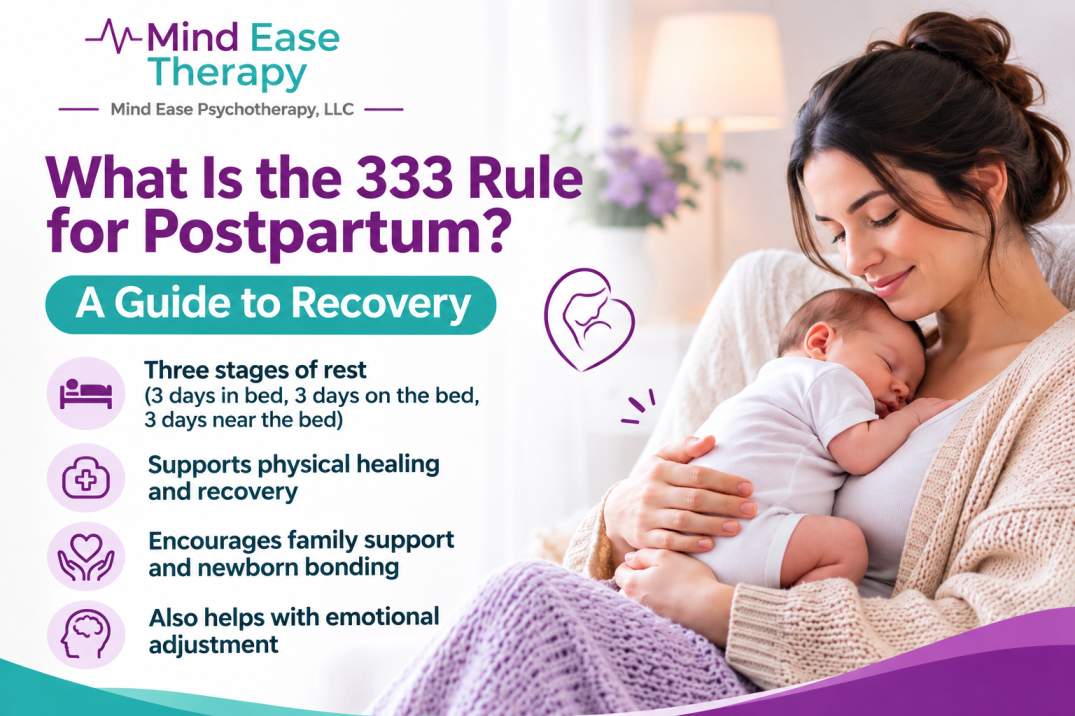
The 333 rule for postpartum is an informal nine-day recovery approach that encourages new mothers to prioritize rest after childbirth. It divides the first nine days into three stages: three days in bed, three days on the bed, and three days near the bed. The goal is to give your body time to heal while gradually returning to everyday activities.
Although this approach can help mothers plan for rest and family support, it is not an official medical guideline. Every postpartum recovery is different, especially after a C-section or a complicated delivery. Your healthcare provider’s advice should always take priority.
Postpartum recovery also involves emotional changes, sleep adjustments, and new responsibilities. Some mothers experience persistent sadness, anxiety, or emotional distress after childbirth. In these situations, postpartum depression therapy can provide professional support to help mothers understand their feelings and work toward better emotional well-being. Taking care of your mental health is just as important as looking after your physical recovery.
Understanding the 333 Postpartum Recovery Rule
The 333 postpartum rule is a simple way to organize rest during the early days after giving birth. It encourages mothers to avoid unnecessary physical strain and accept help with daily responsibilities.
The three stages include:
- First 3 days in bed: Focus on rest, feeding your baby, and physical recovery.
- Next 3 days on the bed: Gradually spend more time sitting comfortably while continuing to rest.
- Final 3 days near the bed: Introduce light activities around your home as you feel comfortable.
The purpose is not to keep you completely inactive. It is to remind you that recovery takes time and you do not need to return to your usual routine immediately.
How Does the 333 Postpartum Rule Work?
Days 1–3: Rest in Bed
The first few days after delivery can be physically demanding. You may experience bleeding, cramping, soreness, and fatigue.
During this stage, focus on basic recovery needs. Rest whenever possible, drink enough water, eat nutritious meals, and spend time bonding with your newborn.
Keep essential items such as water, snacks, diapers, and your phone nearby. Ask your partner or family members to handle cooking, cleaning, and other household responsibilities.
You do not need to remain completely still. Gentle walking and changing positions may be appropriate when medically advised.
Days 4–6: Spend Time on the Bed
During the next three days, gradually spend more time sitting comfortably instead of lying down throughout the day.
You can sit up for meals, relax, read, or spend time with your baby. Continue taking breaks and avoid activities that cause pain or excessive tiredness.
Do not rush into household chores just because you begin feeling better. Your body is still recovering.
Days 7–9: Move Around the Bed
The final stage encourages a gradual return to light daily activities.
You may start walking around your home, spending time in another room, or completing simple tasks if you feel comfortable.
Continue resting between activities. Avoid strenuous exercise, heavy lifting, and physically demanding chores until your healthcare provider considers them appropriate.
Remember, the ninth day is not a deadline for returning to normal activities.
What Are the Benefits of the 333 Postpartum Rule?
The 333 rule can help new mothers approach early recovery with more realistic expectations.
Encourages rest: Taking breaks and avoiding unnecessary physical demands can make early recovery more manageable.
Reduces daily pressure: Mothers can focus on healing instead of feeling responsible for household work immediately after delivery.
Supports newborn bonding: Resting and spending time with your baby can help you adjust to feeding and newborn care.
Encourages family support: Partners and relatives can take responsibility for meals, cleaning, and other daily tasks.
Creates time for emotional adjustment: Becoming a mother involves changes in sleep, relationships, and responsibilities. Having support can make this transition easier.
However, following the exact nine-day schedule has not been proven to prevent postpartum complications or depression.
Is the 333 Rule Suitable for Every Mother?
No. Postpartum recovery depends on your delivery experience, medical history, and overall health.
Recovery After Vaginal Delivery
After vaginal delivery, you may experience vaginal bleeding, perineal soreness, swelling, and uterine cramping. If you had stitches or an episiotomy, follow your healthcare provider’s wound-care instructions.
Rest when needed and gradually resume comfortable activities.
Recovery After a C-Section
A C-section involves abdominal surgery, so recovery requires additional care. Follow instructions for incision care, pain management, walking, and lifting restrictions.
Gentle movement may be encouraged when safe, but your recovery plan should be based on your surgical needs rather than the 333 schedule.
333 Rule vs. 555 Rule: What Is the Difference?
Both approaches encourage rest after childbirth, but they differ in duration.
| Comparison | 333 Rule | 555 Rule |
| Total duration | 9 days | 15 days |
| First stage | 3 days in bed | 5 days in bed |
| Second stage | 3 days on the bed | 5 days on the bed |
| Third stage | 3 days near the bed | 5 days near the bed |
Neither is an official medical recovery protocol. Your healthcare provider can help you understand how much rest and activity are appropriate for your circumstances.
How Does Postpartum Recovery Affect Mental Health?
Postpartum recovery involves emotional changes as well as physical healing. Hormonal changes, interrupted sleep, breastfeeding difficulties, and new parenting responsibilities can affect your mood.
Some mothers experience temporary emotional changes called baby blues. These usually improve within a few days to approximately two weeks.
Postpartum depression is different. It can involve persistent sadness, hopelessness, excessive guilt, anxiety, loss of interest, and difficulty managing everyday responsibilities.
Postpartum anxiety may also cause constant worry about the baby’s safety, racing thoughts, restlessness, and difficulty relaxing.
If these feelings become overwhelming or interfere with daily life, speak with a qualified healthcare or mental health professional.
Can Postpartum Depression Counseling Help?
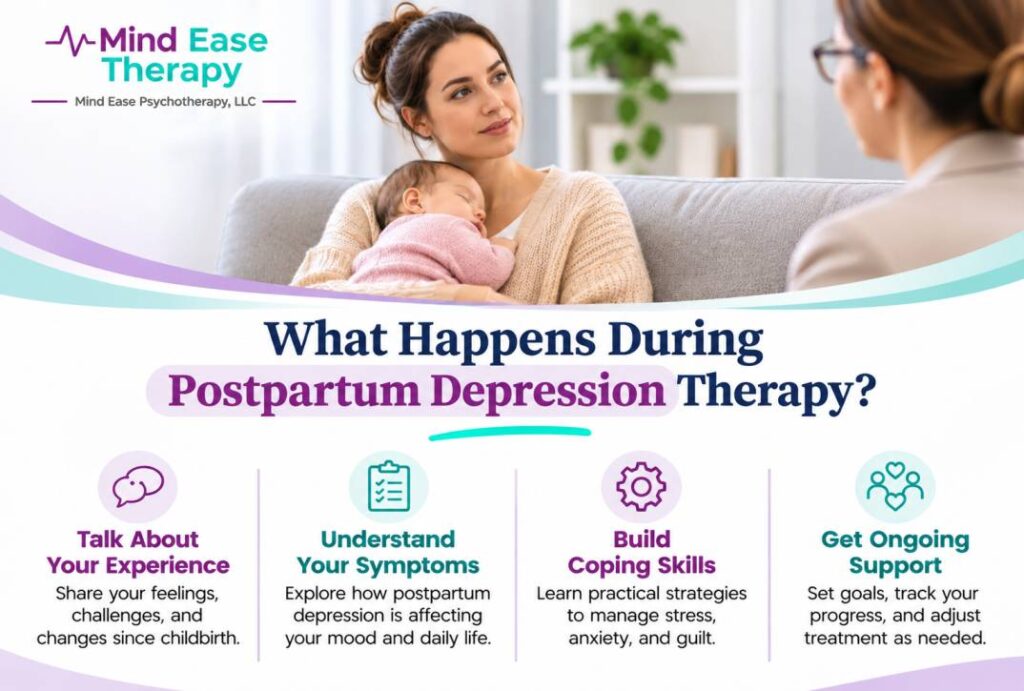
Postpartum depression counseling provides a supportive space where mothers can discuss emotional difficulties and develop healthier ways to manage stress.
Depending on individual needs, treatment may include cognitive behavioral therapy (CBT), interpersonal therapy (IPT), medication, or a combination of approaches.
At Mind Ease Psychotherapy, LLC, compassionate and personalized mental health support can help individuals explore emotional challenges and understand their available care options.
Professional support may be helpful if you experience persistent sadness, anxiety, feelings of hopelessness, or difficulty adjusting to motherhood.
Can Postpartum Couples Therapy Help After Having a Baby?
Having a baby can change a couple’s daily routine, communication, and responsibilities. Sleep deprivation and parenting stress may also create disagreements.
Postpartum couples therapy can help partners improve communication, share responsibilities, and understand each other’s emotional needs.
It can also help couples work through relationship changes while adjusting to parenthood. When one partner experiences postpartum depression, individual treatment may also be necessary.
When Should You Seek Medical Help?
Contact your healthcare provider if you experience concerning symptoms during recovery. Seek immediate medical attention for:
- Heavy vaginal bleeding.
- Fever of 100.4°F (38°C) or higher.
- Severe abdominal pain.
- Severe headache or vision changes.
- Chest pain or difficulty breathing.
- Fainting or severe dizziness.
- Thoughts of harming yourself or your baby.
These symptoms should never be dismissed as normal postpartum discomfort. Thoughts of self-harm or harming your baby require immediate emergency support.
Frequently Asked Questions
Is the 333 rule medically recommended?
No. It is an informal postpartum rest framework, not an official medical guideline. Follow individualized recovery advice from your healthcare provider.
Can I walk during the first three days postpartum?
Gentle walking may be appropriate after childbirth when medically safe. The 333 rule does not require complete bed rest.
Does the 333 rule apply after a C-section?
It can be used as a general reminder to prioritize rest, but C-section recovery requires individualized surgical aftercare and activity guidance.
How long does postpartum recovery take?
Recovery varies. Some physical changes improve within weeks, while other aspects of physical and emotional healing may take several months.
When should I seek postpartum depression counseling?
Consider professional support if sadness, anxiety, hopelessness, or emotional distress persists or interferes with your daily life. You do not need to wait until symptoms become severe.
Conclusion
The 333 rule for postpartum offers a simple approach to early recovery by encouraging three stages of rest and gradual activity. However, it is not a fixed medical requirement, and every mother’s recovery is different.
Give yourself time to heal, maintain healthy routines, and accept support from your family. Pay attention to your emotional well-being as much as your physical health. If postpartum depression or anxiety affects your daily life, professional counseling can help you find appropriate support.
At Mind Ease Psychotherapy LLC, we believe that emotional well-being is an important part of postpartum recovery. Seeking professional support can help you navigate emotional challenges, understand your feelings, and take positive steps toward better mental health.