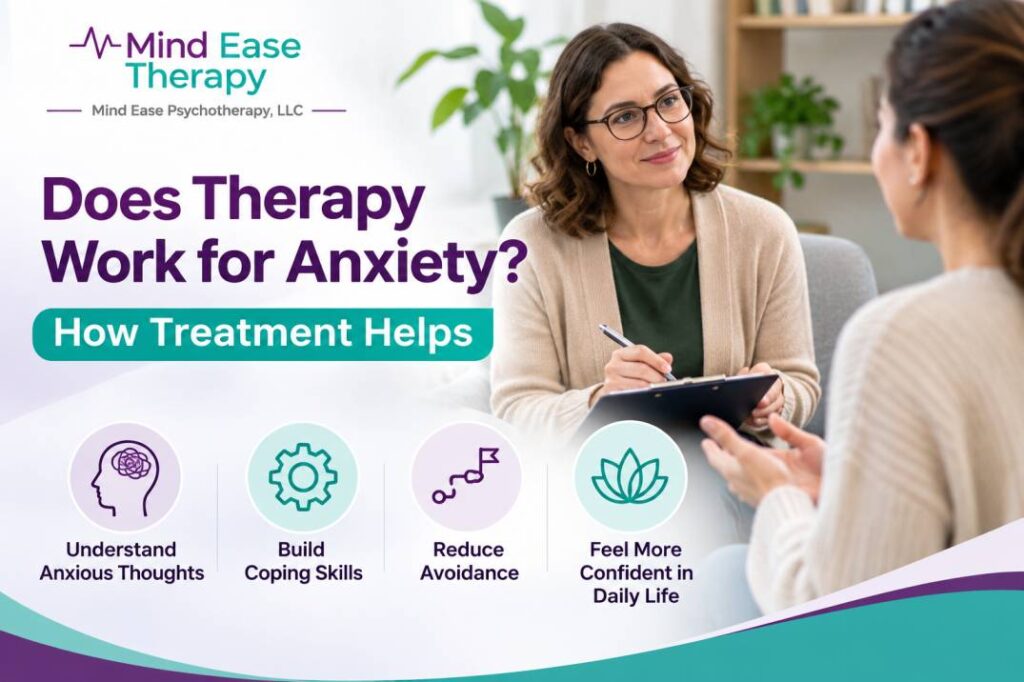
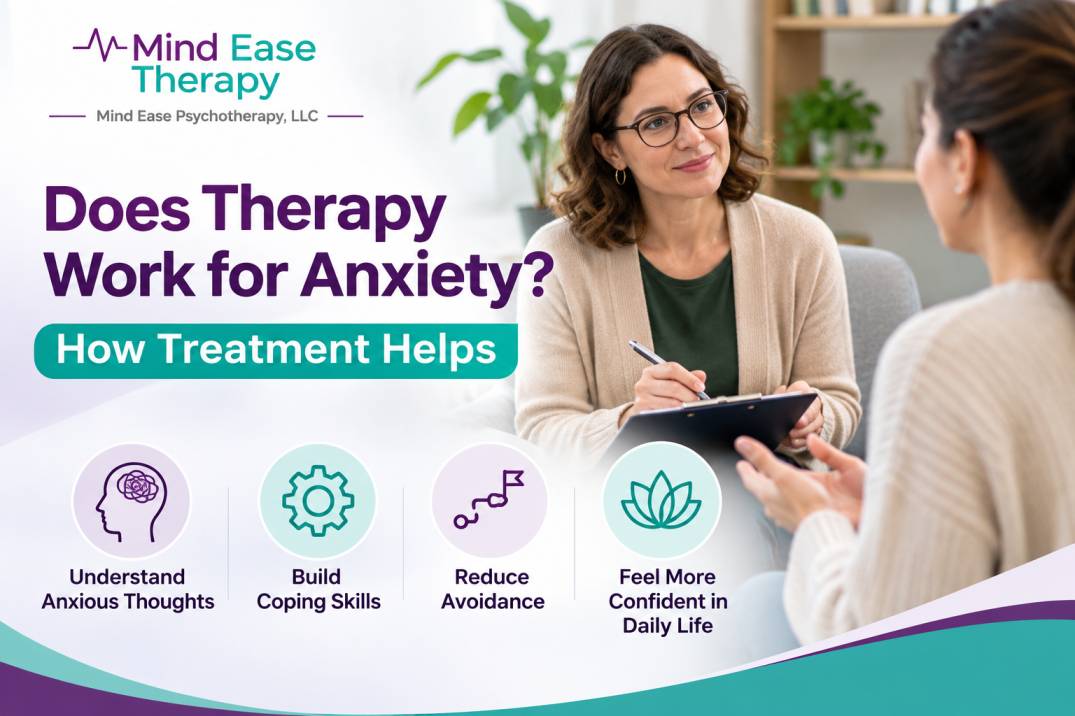
Yes, anxiety therapy can help many people manage anxiety, reduce overwhelming worry, and feel more confident in everyday situations. It provides practical ways to understand anxious thoughts, respond to difficult emotions, and change behaviors that keep anxiety going. The results depend on the type of anxiety, treatment approach, personal circumstances, and consistency.
If anxiety affects your work, relationships, sleep, or daily routine, professional support through anxiety therapy can help you understand what is happening and identify suitable ways to manage it.
Does Therapy Really Work for Anxiety?
Therapy is an established treatment option for anxiety disorders. Research supports cognitive behavioral therapy (CBT), which helps people recognize unhelpful thinking patterns and develop healthier responses to stressful situations.
The National Institute of Mental Health identifies CBT as a well-studied psychotherapy commonly used for generalized anxiety disorder. It also recognizes acceptance and commitment therapy (ACT) as another treatment option.
Therapy does not necessarily remove every anxious thought or prevent stressful experiences. Instead, it helps you respond to anxiety differently. You can learn to recognize when worry is becoming overwhelming, manage emotional reactions, and take part in activities you might otherwise avoid.
How Does Therapy Help With Anxiety?
Anxiety can affect your thoughts, emotions, physical sensations, and behavior. Therapy addresses these areas through conversations, practical exercises, and strategies that fit your needs.
1. Identify Anxiety Triggers
A therapist can help you understand which situations, thoughts, or experiences increase your anxiety. Triggers may include workplace pressure, relationship concerns, financial uncertainty, health worries, or major life changes.
Recognizing these patterns can help you understand your reactions and decide how to respond rather than automatically avoiding uncomfortable situations.
2. Change Unhelpful Thought Patterns
Anxiety often involves expecting negative outcomes or imagining that something will go wrong. These thoughts can feel convincing even when there is little evidence to support them.
CBT helps you examine these thoughts, consider other explanations, and develop more balanced ways of thinking. Over time, this can reduce the influence of persistent worry on your decisions and daily activities.
3. Develop Practical Coping Skills
Therapy can introduce strategies such as relaxation exercises, grounding techniques, problem-solving, and emotional regulation.
You can practice these skills when you notice anxiety building. The goal is to develop responses that help you handle challenging situations more effectively.
4. Reduce Avoidance
Avoiding situations that cause anxiety may provide temporary relief, but it can make certain fears harder to manage over time.
Exposure therapy, a form of behavioral treatment, helps people gradually approach feared situations in a planned and supportive way. The process is tailored to the individual’s needs and should not involve forcing someone into overwhelming situations.
What Types of Therapy Are Effective for Anxiety?
Different approaches may be appropriate depending on your symptoms, diagnosis, preferences, and treatment goals.
Cognitive Behavioral Therapy (CBT)
CBT is one of the most widely studied approaches for anxiety. It focuses on the relationship between thoughts, emotions, and behaviors.
For example, someone who constantly worries about making mistakes at work may learn to identify exaggerated fears, evaluate the available evidence, and respond more confidently.
Exposure Therapy
Exposure therapy helps people gradually face situations, objects, or experiences associated with fear. It is commonly used for certain anxiety conditions, including specific phobias and some forms of social anxiety.
Acceptance and Commitment Therapy (ACT)
ACT helps people make room for difficult thoughts and feelings without allowing them to control every decision. It encourages actions that reflect personal values, even when anxiety is present.
Mindfulness-Based Approaches
Mindfulness techniques can help people pay attention to the present moment instead of becoming caught up in worries about the future. These techniques may be included as part of a broader treatment plan.
The most suitable approach depends on the individual’s circumstances. A mental health professional can help determine which treatment options are appropriate.
What Are the Benefits of Counseling for Anxiety?
Anxiety counseling can support improvements in different areas of life. Depending on your needs and treatment progress, benefits may include:
- Better understanding of anxious thoughts and emotional triggers.
- Improved ability to manage stressful situations.
- Greater confidence when making decisions.
- Healthier communication in personal and professional relationships.
- Reduced avoidance of situations that cause fear.
- More effective responses to everyday challenges.
- Improved ability to recognize and manage emotional reactions.
Progress is different for everyone. Some people notice changes in specific situations first, while others need more time to understand their patterns and practice new skills.
How Long Does Therapy Take to Work for Anxiety?
There is no fixed timeline for anxiety treatment. Progress depends on symptom severity, the type of anxiety, treatment approach, personal goals, and how consistently you participate.
For generalized anxiety disorder, NICE guidance describes CBT as typically involving 12 to 15 weekly sessions, with fewer or additional sessions depending on recovery and clinical need. This is a guideline, not a guaranteed timeline for every person.
You may notice progress when you:
- Recognize anxious thoughts more quickly.
- Feel more prepared to handle stressful situations.
- Spend less time worrying about certain problems.
- Begin doing activities you previously avoided.
- Recover more easily after stressful experiences.
Discuss your progress regularly with your therapist. If your goals or symptoms change, your treatment plan may need to change too.
What If Therapy Does Not Help?
Not every treatment approach works equally well for everyone. If you do not notice improvement, it does not automatically mean therapy cannot help you.
Consider discussing the following with your therapist:
- Are your treatment goals clear and realistic?
- Does the current approach address your main concerns?
- Are you able to practice strategies between sessions?
- Have your symptoms or circumstances changed?
- Would another treatment approach or additional support be appropriate?
A different therapeutic approach, a revised treatment plan, or another professional opinion may be worth considering.
Is Online Therapy Effective for Anxiety?
Online therapy can be a useful option for people who prefer receiving mental health support from home. It allows individuals to connect with a mental health professional through secure virtual appointments, depending on the provider’s services.
The National Institute of Mental Health notes that psychotherapy for generalized anxiety disorder can be effective when delivered virtually through telehealth.
Online sessions may be convenient for people with busy schedules, transportation difficulties, or other barriers to attending appointments. However, the suitability of telehealth depends on individual needs, privacy, technology access, and clinical circumstances.
When Should You Consider Anxiety Counseling?
Occasional anxiety is a normal response to stress. However, professional support may be helpful when worry becomes persistent, difficult to control, or disruptive to everyday life.
Consider speaking with a mental health professional if you experience:
- Frequent or overwhelming worry.
- Difficulty concentrating because of anxious thoughts.
- Trouble sleeping due to ongoing concerns.
- Avoidance of social or professional situations.
- Physical tension or restlessness associated with anxiety.
- Anxiety that affects relationships, work, or daily responsibilities.
You do not need to wait until anxiety becomes severe before seeking support.
Anxiety Counseling in Park Ridge, Illinois
Finding the right support can be an important step toward managing anxiety. If you are looking for anxiety counseling in Park Ridge, consider a provider who takes time to understand your concerns, discusses treatment options, and works with you to establish meaningful goals.
Mind Ease Psychotherapy LLC offers anxiety therapy in Illinois, with an office in Park Ridge and online therapy through telehealth. Individuals can explore support based on their concerns and treatment needs.
If you are searching for an Anxiety Therapist in Park Ridge, IL, learning about the provider’s approach, appointment availability, and insurance options can help you decide whether the practice is a suitable fit.
Frequently Asked Questions
Does therapy completely cure anxiety?
Therapy can significantly improve anxiety symptoms for many people, but it does not guarantee that anxiety will disappear permanently. Treatment focuses on developing skills to manage symptoms and improve everyday functioning.
What is the best therapy for anxiety?
CBT is a well-supported treatment for several anxiety conditions. Exposure therapy and ACT may also be appropriate, depending on the individual’s symptoms and needs.
Can anxiety get worse before it gets better in therapy?
Discussing difficult experiences or approaching feared situations can sometimes feel uncomfortable. A therapist can help you work at an appropriate pace and adjust the treatment approach when needed.
Is online anxiety therapy as effective as in-person therapy?
Telehealth psychotherapy can be effective for anxiety. Whether it is suitable depends on the person’s needs, treatment goals, and access to appropriate care.
Should I choose therapy or medication for anxiety?
Both are treatment options. Some people benefit from therapy, some from medication, and others from a combination. A qualified healthcare professional can help you understand the options based on your circumstances.
Take the Next Step Toward Managing Anxiety
Anxiety can affect how you think, feel, and participate in everyday life, but support is available. Therapy can help you understand your patterns, build practical coping skills, and approach challenging situations with greater confidence.
If you are considering anxiety treatment in Park Ridge, contact Mind Ease Psychotherapy LLC to learn more about available appointments, online therapy, and insurance options. Taking the first step toward professional support can help you begin working toward meaningful changes.
Also Read:
Anxiety Therapy: Benefits, Types, and What to Expect
What Is Anxiety Therapy?