
Couples therapy helps a lot of people, but nobody can give you one number that applies to your relationship. Research shows that couples who go to therapy tend to be happier with their relationship afterward than couples who don’t. How much better, and whether that means staying together, depends on the couple’s therapy.
That’s an honest answer, but it’s not a very satisfying one if you’re sitting at the kitchen table wondering whether counseling is worth trying. So let’s look at what the research actually found, what “success” can mean, and what makes it more or less likely to work.
How Effective Is Couples Therapy at Improving Relationships?
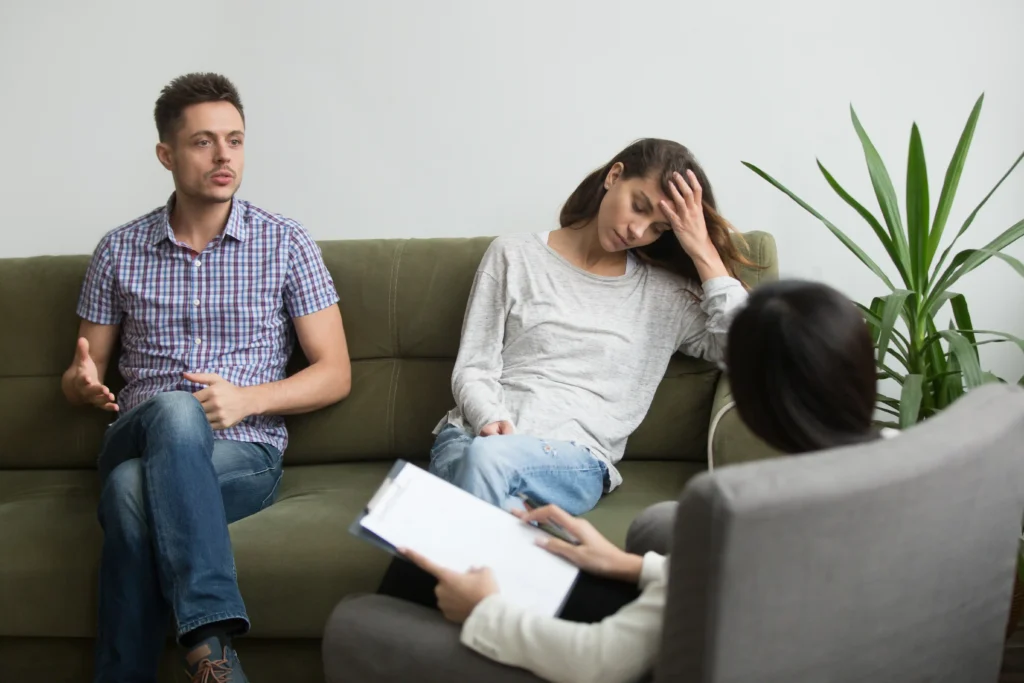
Most couples who come to therapy are stuck in a loop. The same argument shows up with different details. One person pushes, the other pulls away, and both end up feeling misunderstood. Therapy helps you see that loop, figure out what sets it off, and try something different.
The research backs this up. A 2020 meta-analysis in the Journal of Consulting and Clinical Psychology pooled results from 58 studies covering 2,092 couples. It found substantial improvements in relationship satisfaction after treatment, along with changes in communication, emotional closeness, and how partners treated each other.
Those are encouraging results, but they come with a caveat. An average improvement doesn’t mean every couple improves, and “more satisfied” isn’t the same as “problem solved” or “still together.”
What percentage of couples benefit from couples therapy?
There isn’t one reliable percentage. Studies measure different things, use different therapy methods, and recruit different kinds of couples, so the numbers vary a lot.
One example: a 2024 meta-analysis of Emotionally Focused Couple Therapy (EFT) looked at 20 studies with 332 couples. It estimated that about 70% of participants no longer met the studies’ criteria for relationship distress by the end of treatment.
That’s a good result for that therapy in those studies. It doesn’t mean 70% of all couples in all kinds of counseling will get the same outcome. Your results depend on you, your partner, and the work you do.
It also helps to separate improvement from recovery. Some couples argue less and talk better but still have big issues to sort out. Others come out of therapy with far less distress overall. Both count as progress. They just aren’t the same thing.
What does success in couples therapy look like?
It depends on what you came in for. Some couples want to feel close again. Others need to work through a breach of trust, or they keep having the same fight and don’t know how to end it. Some aren’t sure they want to stay together at all.
In everyday terms, progress might look like:
- Disagreeing without yelling
- Hearing your partner out before getting defensive
- Saying “that hurt” instead of launching into an attack
It also tends to include learning about yourself. One partner may realize they go quiet and shut down during conflict. The other may notice that pushing for an answer right now only makes things worse. Once you can see your own part in the pattern, you can change it.
And success doesn’t always mean staying together. If therapy helps two people understand their differences and make a clear, informed decision, even a decision to separate, that can be a worthwhile outcome.
What Factors Affect the Success Rate of Couples Therapy?
How many sessions you attend matters less than you might think. These things tend to matter more.
Both partners’ willingness to participate
Therapy usually works best when both people are willing to be honest and to look at their own behavior. You don’t have to agree on everything. Each of you just needs a real chance to say how things look from where you stand.
Sometimes one partner is ready and the other is hesitant. That doesn’t mean it’s hopeless. A first conversation with a therapist can clear up what the process involves, and some reluctant partners feel differently once they see it’s not a trial with a verdict.
The therapist’s experience and approach
Therapists work in different ways. Some focus on emotional connection and attachment. Others concentrate on communication skills, behavior changes and problem-solving. A therapist with real training in couples work can spot the patterns behind your conflict and choose an approach that suits you.
It’s fair to ask about their license, their training, their methods and how you’ll both know whether things are improving.
How serious and how long-standing the problems are?
Arguing about who does the dishes isn’t the same as years of buried resentment or repeated betrayals of trust. Older problems often take longer to work through because the habits are deeper.
But a long history of trouble doesn’t decide the outcome. What counts is the nature of the problem, what you’re aiming for, and whether change is still possible.
What happens between sessions?
An hour a week in a therapist’s office is only part of it. The rest happens in your kitchen, your car and your text messages.
Say you fight about money all the time. You might agree to set aside twenty minutes each Sunday to go over spending, instead of bringing it up when someone is already stressed. The point isn’t to avoid disagreements. It’s to have them in a way that doesn’t leave you both worse off. Small experiments like this show you what works and where you still need help.
Mental health and everyday stress
Depression, anxiety, money trouble, work pressure and big life changes all spill into relationships. When someone is overwhelmed, it’s harder to be patient or say what they need clearly.
Couples therapy can help partners understand how those pressures affect them. If one of you also needs treatment for a mental health condition, individual therapy alongside couples work is often the best combination.
How Long Does Couples Therapy Take to Work?
There’s no set timeline. Some couples notice a shift fairly early. Others need more time, especially when there’s a lot of damage or several issues at once. How long it takes depends on your goals, your therapist’s approach and how things go along the way. No number of sessions can promise a result.
What happens during the first few sessions?
Early sessions are mostly about understanding. Your therapist will ask about what keeps going wrong, how you each handle conflict, your history together and what you each hope will change. Expect both of you to be asked questions, not just one of you.
From there you’ll set a few clear goals. They might be talking to each other more respectfully, repairing a breach of trust, feeling closer, or deciding how to deal with a difference you can’t seem to settle. Goals make it much easier to tell later whether it’s working.
What are the signs that couples therapy is working?
You’ll often see it in small moments before the big problems are solved. Arguments get less intense. You catch yourself listening instead of preparing your reply. A hard conversation ends with each of you understanding the other a little better. Subjects you used to avoid start to feel possible to bring up.
You won’t stop disagreeing, and that’s fine. A better sign is that you can disagree without doing lasting damage each time.
What if couples therapy is not helping?
Say so. Tell your therapist what you hoped for, what has changed and what hasn’t. They might adjust their approach, revisit your goals or suggest additional support. If the two of you want fundamentally different things from the relationship, that may need its own conversation.
It’s far better to name a lack of progress than to keep showing up out of habit with no sense of what you’re working toward.
Can Couples Therapy Save a Struggling Marriage?
It can help some couples repair their relationship. It can’t guarantee a marriage will survive. What it can do is help you understand what’s going wrong, change how you treat each other and make decisions with a clearer head.
Counseling is worth considering if you keep having the same fight, feel like roommates, struggle with intimacy or have stopped being able to raise concerns without them blowing up.
Can marriage counseling help after infidelity?
Infidelity can shake a relationship to its foundations. The partner who finds out may feel hurt, angry, confused and unsure what to believe. The partner who had the affair may find it hard to explain or to face the damage.
Therapy gives you a structured place to talk about it. Depending on your situation, that might mean setting boundaries, understanding what happened and what it did to the other person, and deciding whether you both want to rebuild.
Trust comes back slowly and through consistent behavior. A single apology rarely does it, and nobody should be pressured into reconciling. Some couples come through it stronger. Others decide to part, and that’s a legitimate outcome too.
Can couples therapy work if only one partner wants to attend?
Couples therapy needs both people, so one partner refusing makes it harder. But you aren’t stuck. You can go on your own to understand your part in the pattern, get clear on your boundaries and think through your options. Individual therapy can’t make your partner change, but it can help you decide how you want to respond.
When Is It Too Late for Couples Therapy?
There’s no universal cutoff. Couples have struggled for years and still turned things around. But therapy can’t produce reconciliation if one or both people no longer want to be in the relationship.
Constant conflict, distance and broken trust are reasons to take a hard look at what’s happening. They aren’t proof that things can’t improve.
When should you consider ending a relationship?
Look at the overall pattern, not a single bad night. Ongoing disrespect, serious boundary violations, goals that really don’t match, and a partner who won’t address harmful behavior can all shape that decision.
Counseling can help you see your options, but staying together isn’t always the healthiest outcome. You aren’t obliged to remain in a relationship just because therapy is available.
Safety comes first. If there is abuse, threats, controlling behavior or you’re afraid of how your partner will react, joint therapy may be unsafe. Talk to a professional on your own or contact a domestic violence service. In the US, the National Domestic Violence Hotline is available at 1-800-799-7233, and if you’re in immediate danger, call 911.
What Are 10 Signs That a Relationship Is Broken?
“Broken” is a strong word, and no checklist can tell you for sure. But these patterns are worth paying attention to, especially if they keep happening after you’ve tried to fix them.
- The same arguments keep coming back. You’ve talked about it a dozen times and nothing changes.
- Conversations turn hostile. Insults, eye-rolling and contempt are routine.
- You feel disconnected. Sharing what’s going on inside you has started to feel pointless or risky.
- Trust has been damaged. Lies or broken promises make it hard to feel secure.
- Respect is missing. One or both of you regularly brushes off the other’s feelings or needs.
- You avoid important conversations. You stay quiet because you already know how it’ll go.
- Intimacy has changed. Emotional or physical closeness has faded and no one has addressed it.
- You feel unheard. You raise concerns and they don’t seem to land.
- Apologies don’t lead to change. The promise is followed by the same behavior.
- You want different things. One of you wants to work on it and the other has checked out.
These aren’t a diagnosis. What they mean depends on how often they happen and whether both of you are willing to deal with them. Some of these patterns respond well to support. Others may tell you the relationship needs to change or end.
What Is the 7-7-7 Rule for Couples?
The 7-7-7 rule is a popular idea for keeping a relationship from getting lost in busy schedules. The usual version is a date every seven days, a more planned outing every seven weeks and a trip together every seven months.
Can the 7-7-7 rule improve a relationship?
It can help. Regular time together creates room for conversation and shared experiences, and you can adapt it to your budget and schedule. A walk or a phone-free dinner counts.
But it isn’t a clinically tested treatment, and it won’t fix deeper problems like broken trust or constant conflict. Those usually need a more focused approach, often with a professional.
Can Couples Therapy Help With Mental Health Challenges?
Mental health struggles affect how partners talk, connect and handle stress. Couples therapy can help with the relationship side of that, but it doesn’t replace individual treatment for the condition itself.
Couples Therapy for Depression
Depression can drain energy, motivation and interest in doing things together. A partner may read that as rejection, while the person with depression struggles to explain what’s happening or what they need.
Couples therapy can help you talk about it and find ways to support each other. The person with depression thearpy may also need their own assessment and treatment.
Bipolar Couples Therapy
Bipolar disorder therapy affects mood, energy, sleep and day-to-day functioning, which can put real strain on a relationship. Couples sessions can help you talk about expectations, communication and how to support each other.
It works best alongside individual clinical care. It doesn’t replace psychiatric treatment or prescribed medication.
Postpartum Couples Therapy
The months after a baby arrives bring huge changes in sleep, roles, routines and mood. Partners often clash over chores, caregiving, intimacy and who needs what.
Couples therapy can help you talk through those changes and work as a team. If either of you has symptoms of postpartum depression or another significant mental health concern, an individual assessment is important.
Couples Therapy for Anxiety and Trauma
Anxiety therapy and trauma can affect trust, how you manage emotions and how you respond during conflict. Couples work can help you recognize those patterns. Depending on how much anxiety or trauma symptoms are interfering, individual therapy may help alongside it.
How to Find the Right Couples Therapist in Park Ridge, Illinois
If you’re searching for couples therapy near you, look for a licensed professional with real experience in relationship work. The best fit depends on your goals, their training, their availability and the kind of support you need.
Check qualifications and experience
Ask about their license, their training in couples counseling and whether they’ve worked with issues like recurring conflict, infidelity, communication problems or emotional distance. A good therapist can explain how they work and why it might suit you.
Ask about approach and goals
Ask how they handle communication problems, trust, intimacy and disagreements about the future. It’s also reasonable to ask how they’ll review progress and what happens if the approach isn’t helping.
Understand fees and insurance
Before you start, ask about session fees, payment policies and whether your plan covers couples counseling. Coverage depends on your plan, the provider and how the service is billed. Don’t assume it’s covered.
Consider online couples therapy
Online sessions can be a good option if schedules, travel or distance get in the way. Ask about privacy and whether remote sessions suit your situation. At Mind Ease, online therapy is available to clients located in Illinois, and we also have an office in Park Ridge.
Frequently Asked Questions
What percentage of couples benefit from couples therapy?
Many distressed couples benefit from evidence-based approaches, but there’s no single reliable figure. Reported estimates vary with the therapy method, the couples studied and how improvement was measured. Treat any percentage as a rough guide, not a promise.
Is couples therapy worth the money?
It can be, especially if the same problems keep coming back and both of you want help. Weigh the cost against the therapist’s approach and the changes you’re hoping for. No treatment can guarantee a result.
How many couples therapy sessions are usually needed?
There’s no standard number. It depends on the problems you’re working on, your goals and your progress. Your therapist can give you a rough sense after the first few sessions.
Can couples therapy work after years of conflict?
Yes, couples do make progress after years of trouble. How long the problem has lasted doesn’t decide the outcome. Your circumstances, the approach and your willingness to change all matter.
What is a toxic marriage?
It’s a relationship with ongoing patterns that harm one or both partners, such as constant disrespect, manipulation, controlling behavior or repeated boundary violations. Abuse and coercive control are different from ordinary communication problems and need a safety-first approach.
When should you end a relationship?
There isn’t one rule. Ongoing harm, unsafe behavior, goals that don’t match, or a partner who won’t address serious problems can all lead someone to leave. If you feel unsafe, put your safety and support first.
Can online couples therapy be effective?
For many couples, yes. It works best when you have a private space, a qualified therapist and no safety concerns. Research on online relationship education programs isn’t automatically proof that every form of online therapy works.
So, Does Couples Therapy Work?
For many couples, yes. It can improve communication, break repeating fights and rebuild closeness. But there isn’t one success rate, and getting better doesn’t always mean staying together.
If you’re thinking about counseling, start by naming what you’d like to be different. A good therapist can help you work out where to begin and keep track of whether it’s helping.
Ready to Talk to Someone?
At Mind Ease Psychotherapy, LLC we offer couples therapy alongside individual and teen therapy, in person at our Park Ridge office and online for clients in Illinois. If you’d like to ask whether it’s a good fit for you and your partner, reach out.
Book an Appointment | Call 855-770-5741 | info@mindeasetherapy.com